

 In stock
Prusa Research · authorised UK reseller
Prusament ASA 800g
 1 / 2
1 / 2£25.99inc. VAT
SKU PRUSA-3480-0
Order before 3pm for same-day processing. Tracked delivery, [CONFIRM TYPICAL DELIVERY WINDOW] to your door.
Make it yours
Choose your options. The price updates as you go.
1
A closer look
Prusament ASA 800g · Product information from Prusa Research.
Explore product details (5)
Why To Choose Prusament
Prusament is a premium-grade material made by the same people who build the printers. Every spool is manufactured in-house with consistent color and high diameter precision. You can verify it yourself, down to the last meter.
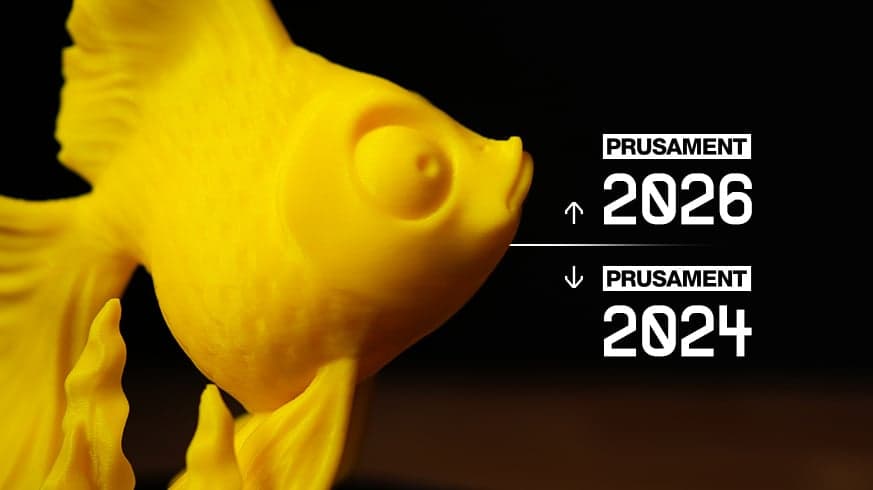
Guaranteed Color Consistency
Every Prusament color is formulated and locked to a documented spectroscopic recipe. Prusa tests every batch against the standard before it ships. The result: if you run out mid-project and order a second spool, the colors will match perfectly.
Precise Manufacturing & Strict Quality Control
Our diameter tolerance is the maximum limit, not an average: when we say the diameter tolerance is ±0.04 mm, the real numbers are much lower. We continuously measure and record diameter and ovality across the full length of every spool and publish the actual data.
High Quality You Can Check Yourself
Every Prusament spool comes with the actual measured data from manufacturing: diameter readings along the entire length, weight, and ovality. We're the only filament manufacturer in the world that does this.
Perfect Winding On Every Spool
Our PLA filament is wound under controlled tension on precision machines. Every spool goes through a final inspection before shipping. The result is a spool that feeds smoothly from start to finish. Also, it looks great every time.

Made In The EU And USA
Prusament is manufactured in our facilities in the Czech Republic (Europe) and Delaware (United States). That means faster shipping, lower import duties where applicable, and a supply chain under our full control.
There's no third-party manufacturer who can quietly change a raw material supplier. No surprise batch failures from a factory you've never visited.
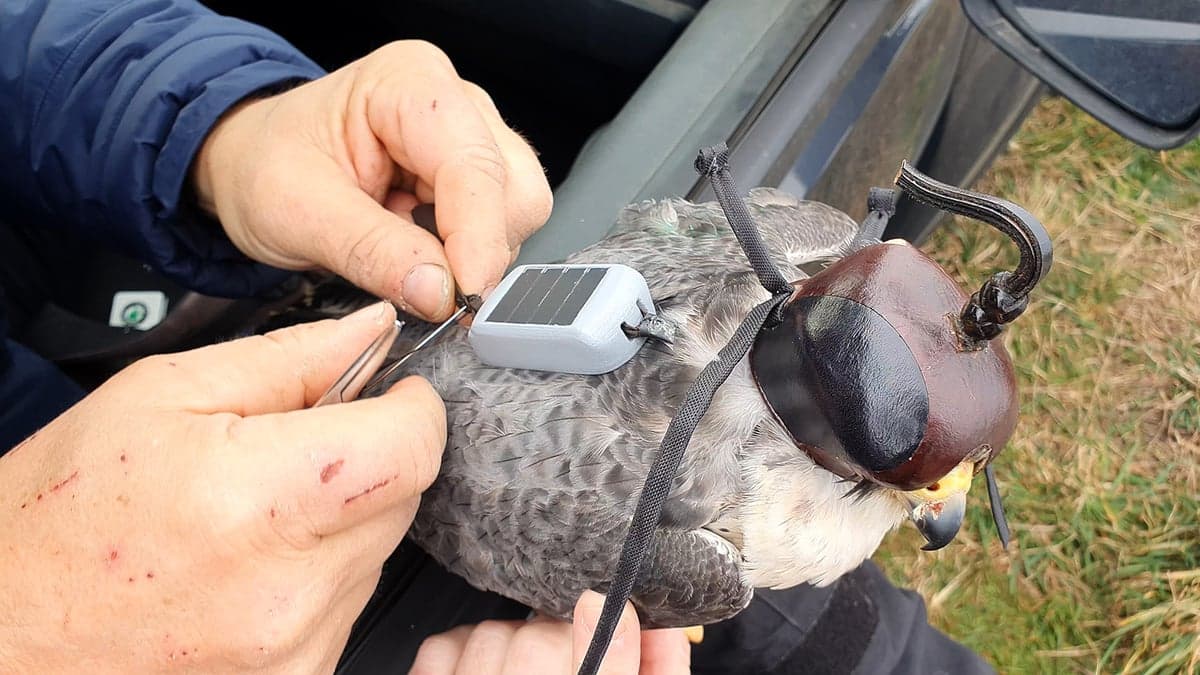
Excellent for outdoor use
ASA's one of the main advantages is excellent UV resistance. This, in combination with good high-temperature resistance, makes it perfectly suitable for making outdoor parts with a long lifespan. Here's a great example: Czech company Anitra System uses Prusament ASA for making GPS loggers attached to migratory birds, where long lifespan and high resistance are necessary.
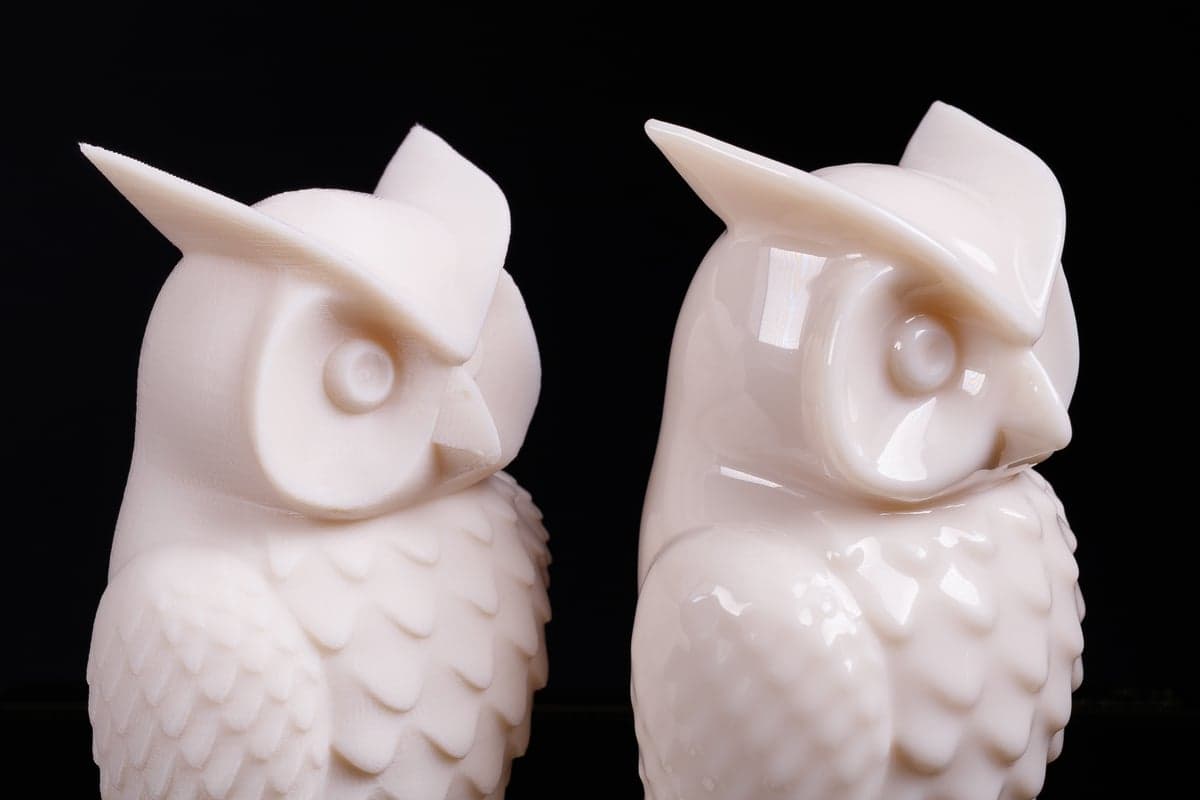
Perfectly smooth finish made with acetone vapors
ASA is soluble in acetone. When exposed to acetone vapors, the model's surface melts and forms a glossy finish, hiding print layers and imperfections. The result resembles an injection-molded part. You can learn more about chemical smoothing in our blog article .
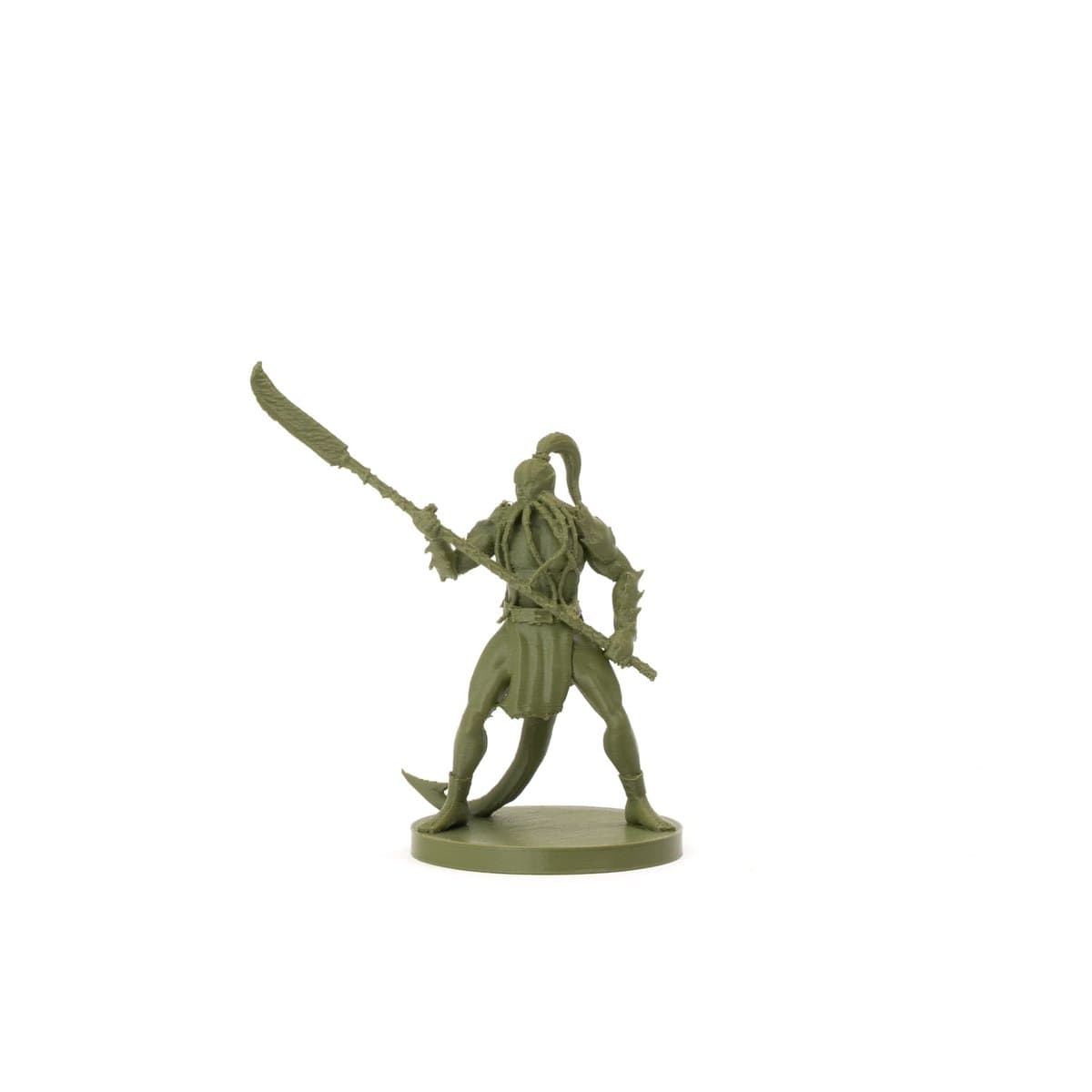
Fine details without stringing
Unlike other technical materials, ASA offers little to no stringing. This makes it suitable for printing tiny, detailed parts, such as tabletop figures and similar models.
Basic Attributes
Strengths
- Great for outside use – UV stable
- Good high-temperature resistance
- Detailed prints without a stringing effect
- Can be smoothed with acetone vapors
- Can be easily sanded / post-processed
- Good mechanical resistance
Worth knowing
- Large models tend to warp. We recommend printing in an enclosure or printing large components with a less warping material, such as PETG.
- Produces a slight odor of burned plastic during printing (less than ABS)
- Contains styrene (potentially harmful fumes). We recommend printing in a well-ventilated area or using an enclosure with active filtration.
- Slightly hygroscopic (absorbs moisture)
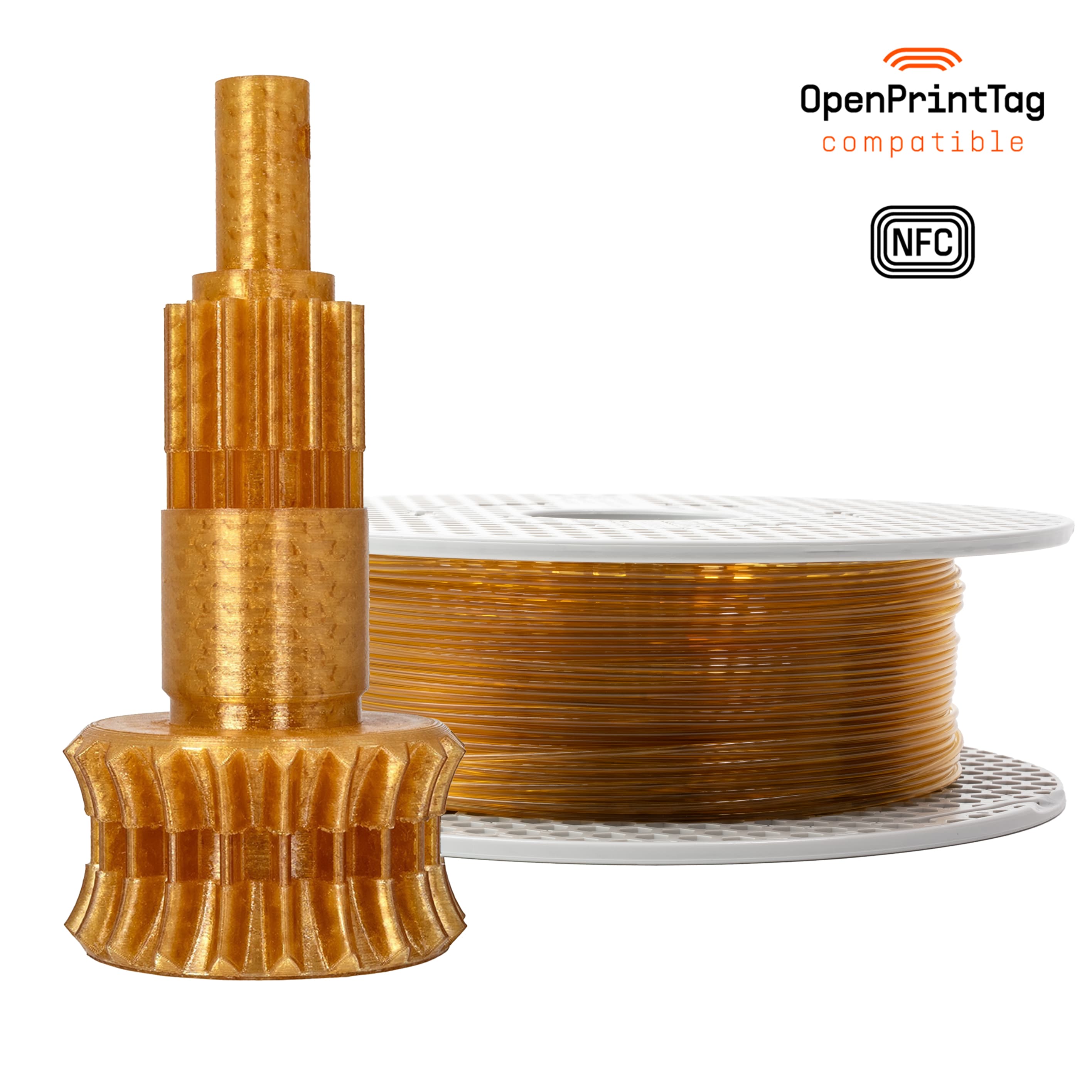
New spools with OpenPrintTag
Smarter spools. Open standard. No cloud lock-in.
Starting October 2025, all Prusament filaments ship on a redesigned spool with a fully rewritable NFC tag powered by the OpenPrintTag standard.
The OpenPrintTag attached to your Prusament spool contains essential data about the material and can be read with the Prusa mobile app. It works entirely offline, it is free to extend, and open for anyone to build upon.
Tips & Tricks For Beginners
Use an enclosure with filtration system or print in a well-ventilated area
It’s important to run the prints in a well-ventilated room because the material releases fumes and substances that could pose a potential health risk. However, when ventilating the room, do not create a draft around the print – this will negatively impact the result. The best way is to use a 3D printer with an enclosure and an active filtration system.
Print in higher ambient temperature to prevent warping
You may encounter some issues related to the shrinking (warping) of the material, especially when printing larger models. This effect is much less severe compared to ABS, but still, even with the heatbed set to 110°C, the prints can shrink and warp, causing them to detach from the print bed. This issue can be eliminated by printing inside an enclosure (for example, our Prusa Enclosure ) or by adding a draft shield around the object in PrusaSlicer.
Protect yourself when smoothing ASA in acetone
This type of post-processing gives the model a smooth, glossy finish that looks slightly like a vacuum-molded component. We addressed this topic in one of our older blog articles. You can learn more here. But safety first: Remember that Acetone is highly flammable and you work with it at your own risk. Do everything necessary to avoid direct contact and inhalation. Always work in well-ventilated areas, as far as possible from flammable objects and use protective equipment such as gloves and face protection (protective shield or protective glasses). Acetone vapors tend to be very prominent and may cause respiratory issues.
ASA may require occasional drying when stored improperly
We recommend storing ASA in a dry place or drying it before printing. To dry the filament, please follow the instructions in our article .
The details that matter
Technical specifications
Manufacturer figures, with plain-English notes where useful.
8 specifications
Printing
- Diameter
- 1.75 mm
- Recommended nozzle
- 0.4 mm brass nozzle
- Recommended steel sheet
- Satin
- Filament diameter tolerance
- ±0.04 mm
- Supported prusa print profiles
- All Prusa FDM 3D printers
Materials & environment
- Materials
- ASA / ABS
- Nozzle temperature
- 260±5 °C
- Heatbed temperature
- 110±5 °C
A question before you order?
Ask about compatibility, the right configuration, or delivery for this product.
Explore more from Fabinity
Browse the range- In stock
 Out of stock
 Out of stock
 In stock