

 In stock
Prusa Research · authorised UK reseller
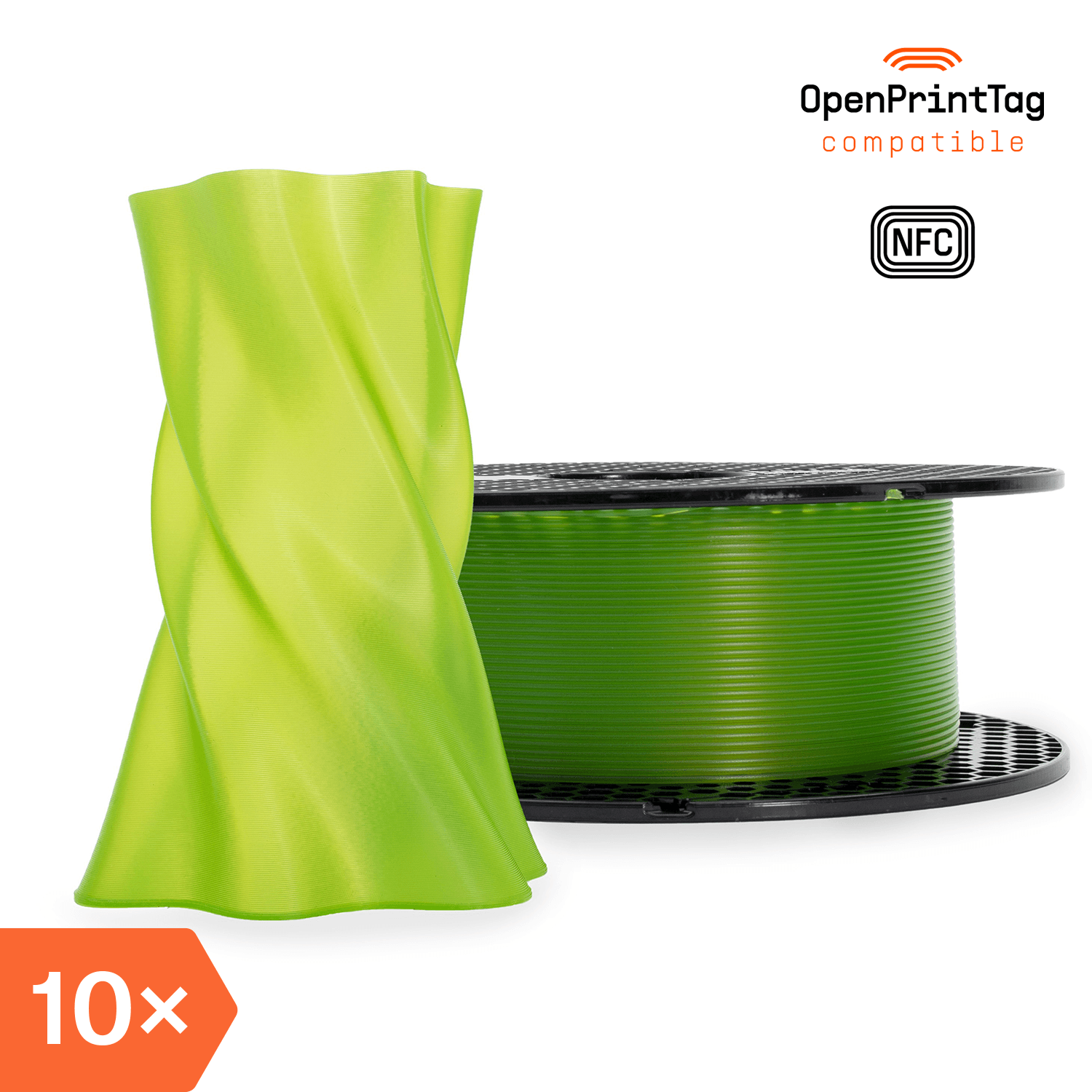
Prusament PVB 10x spool multipack
£399inc. VAT
SKU PRUSA-3732-0
Contact us for availability and delivery information.
Make it yours
Choose your options. The price updates as you go.
1
About this product
What can you expect?
Prusament PVB is our own in-house made filament. The whole manufacturing process is closely monitored and tested - we guarantee ±0.03mm precision and highly-consistent colors. You can inspect the parameters of every spool we made at prusament.com. Check the sample spool!
Manufactured In-House By Josef Prusa We were not satisfied with the quality of filaments on the market. So we decided to make our own! Prusa Research is the only 3D printer manufacturer with its own filament production.
Premium-Grade Materials And Thorough Testing The whole manufacturing process is closely monitored and tested – string diameter, color consistency, and mechanical properties – to make sure that every spool is perfect.
± 0.03 mm Manufacturing Guaranteed Precision We believe the industry standard of 0.05 mm isn’t sufficient for perfect 3D printing. Instead, we guarantee ±0.03mm precision and highly-consistent colors in our filaments.
High Quality You Can Check Yourself We are the only manufacturer that gives the option to inspect parameters of every filament spool. Scan a QR code on the spool to see all details online (check the sample spool).
Read more about Prusament PVB in the article at PrusaPrinters.org or at Prusament.com!
About PVB
Polyvinyl butyral (PVB) is a design material suitable mostly for visual purposes. Thanks to its translucency and easy smoothing with isopropyl alcohol, PVB is great for printing visual models such as unconventional vases, jewelry, lampshades, and other design elements. Its most notable benefit is its easy solubility (in isopropyl alcohol), which allows users to create models with a glass-like finish. Combining translucency and easy smoothing expands the field of use. Movie props, costume parts, and other unusual models are just some of the many options. Additionally, due to its low warping PVB is suitable for printing large models. Print settings of PVB are similar to PLA, and mechanical properties are slightly better (similar to CPE or PETG).
Printing Setup
- Nozzle - 215 ±10 °C
- Heatbed - 75 °C
- Recommended Steel Sheet - Smooth PEI / Satin
Before printing, learn about print surface preparation in our dedicated article and material table.
Basic Attributes
- Easy to print (similar to PLA) - Poor high-temperature resistance
- Ideal for design parts, vases, lamp shades etc. - Hygroscopic filament (absorbs moisture)
- IPA chemical smoothing - Poor layer-to-layer adhesion (slightly worse than PLA)
- Great surface adhesion
- Good mechanical properties (similar to CPE/PETG)
- Low warping (lower than PLA)
Beginners tips & tricks
Because it is so easy to print (like PLA), PVB is a great material for both beginners and experienced 3D printer users who would like to try something new. We recommend printing with a large nozzle diameter and spiral vase mode, then smoothing with IPA, to get a stylish glass-like appearance. PVB’s main weakness is low heat resistance which is similar to PLA (60 °C). That means the prints cannot be placed in a parked car in direct sunlight, for example. Learn more about chemical smoothing in our dedicated article or the PVB release article.
Notes This PVB is made in-house by Prusa Research. 1.75 mm filament is manufactured with the precision of +- 0.03 mm Before printing, make sure the surface of the heatbed is clean as described in 3D Printing Handbook. To dry the filament, please follow the instructions in our article.
DOWNLOAD PORTFOLIO
The details that matter
Technical specifications
Manufacturer figures, with plain-English notes where useful.
1 specification
Materials & environment
- Materials
- PVB
A question before you order?
Ask about compatibility, the right configuration, or delivery for this product.
Explore more from Fabinity
Browse the range- In stock
 Out of stock
 Out of stock
 In stock